Pokemon Team Draft Manager
Table of contents
- description
- feature #1 - team management
- feature #2 - strength analysis
- feature #3 - data persistence
- technologies used
Description
Pokemon Team Draft Planner is a desktop application I wrote in Java. It’s an application for both casual and competitive pokemon players to whip up their pokemon dream teams :D
Features
This app offers various features for managing pokemon teams.
- Team management functionality (creating/viewing/deleting teams)
- pokemon team strength analysis
- persistence to non-volatile memory (aka saving/loading data)
All of the above features can be accessed via a graphical user interface (GUI)!
Team management
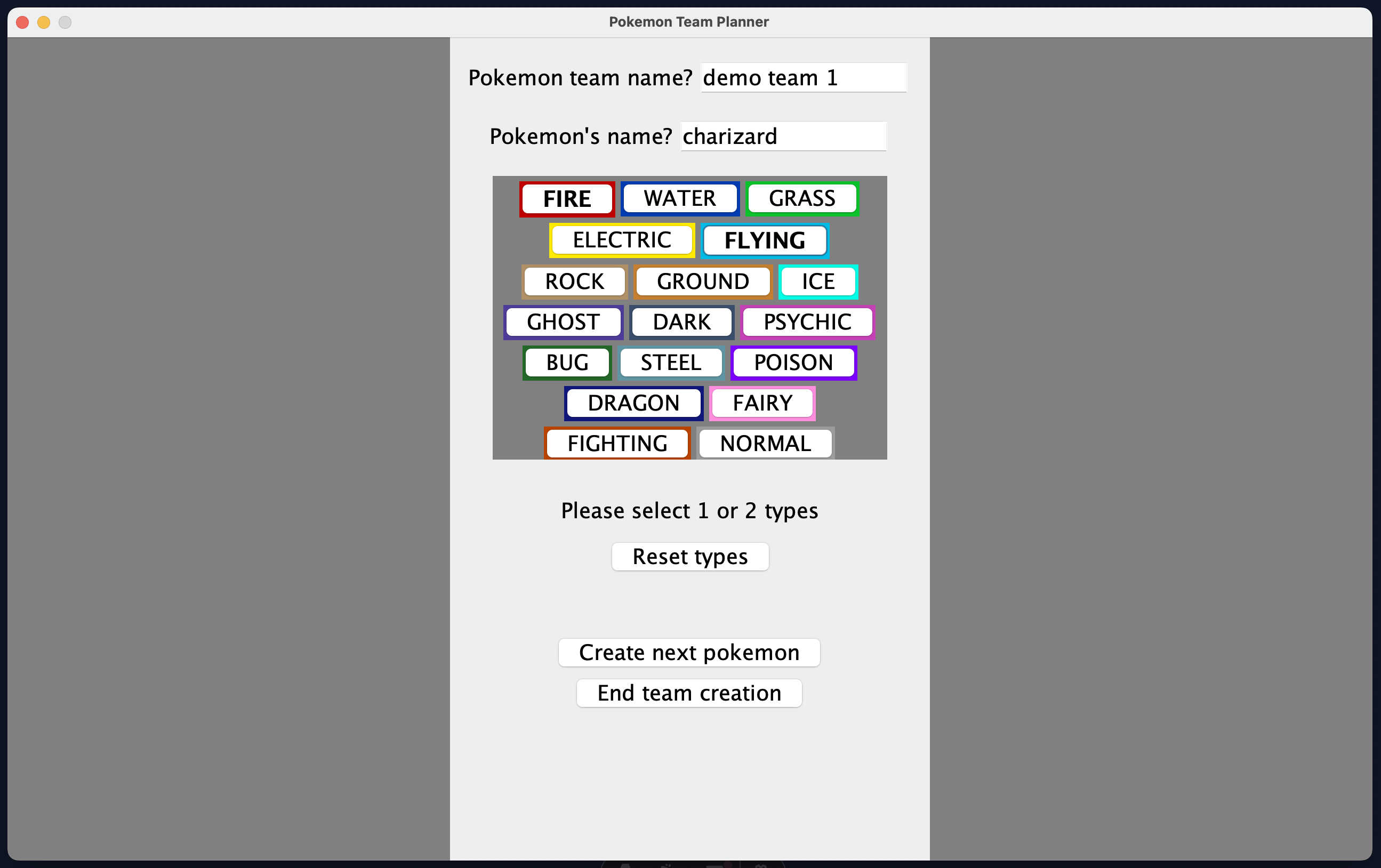
Users can create new teams using a GUI. They can set a nickname for the team, and can add up to 6 pokemons to that team.
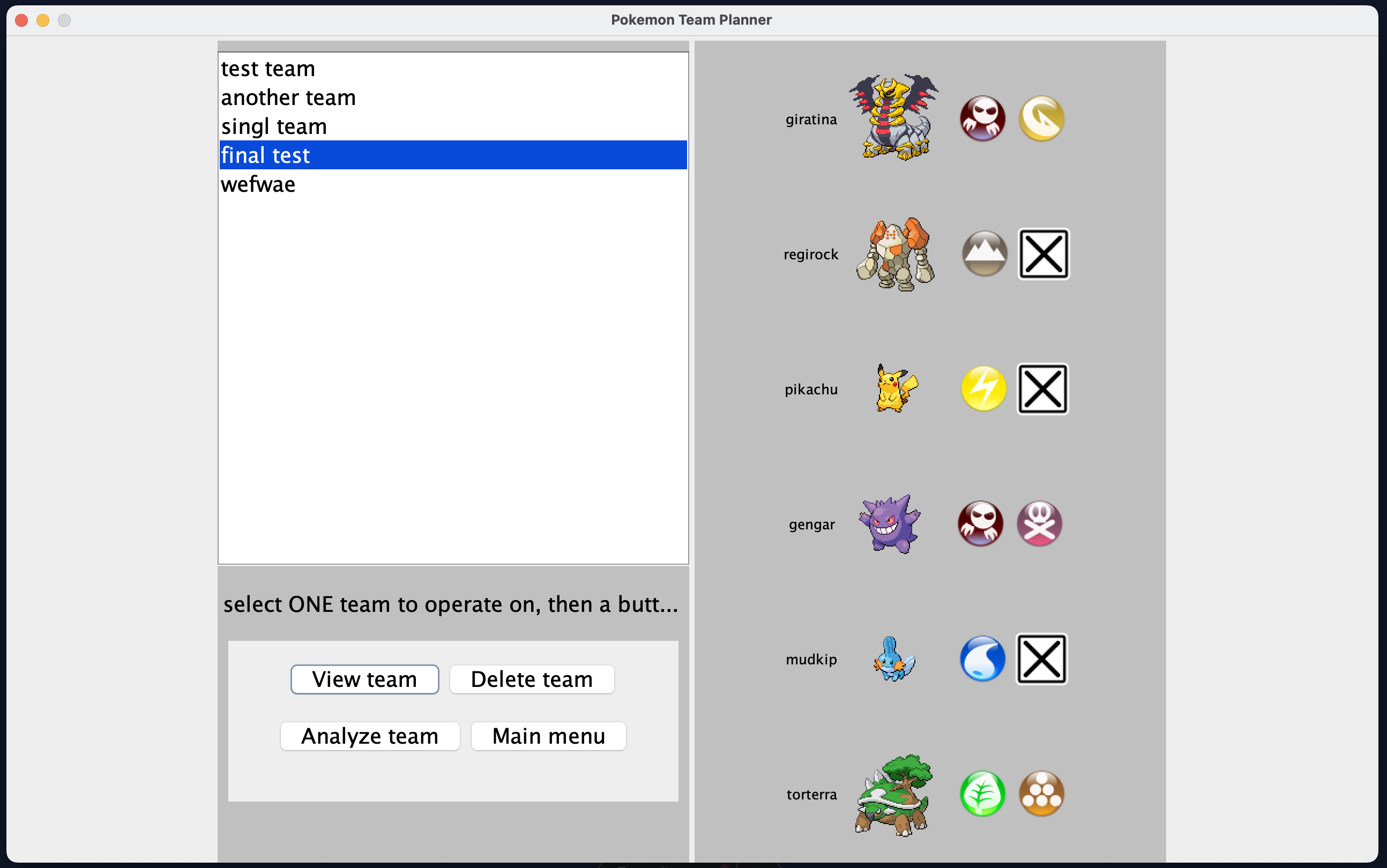
There’s also a screen to view the list of all pokemon teams the user generates (as seen above).
Team strength analysis
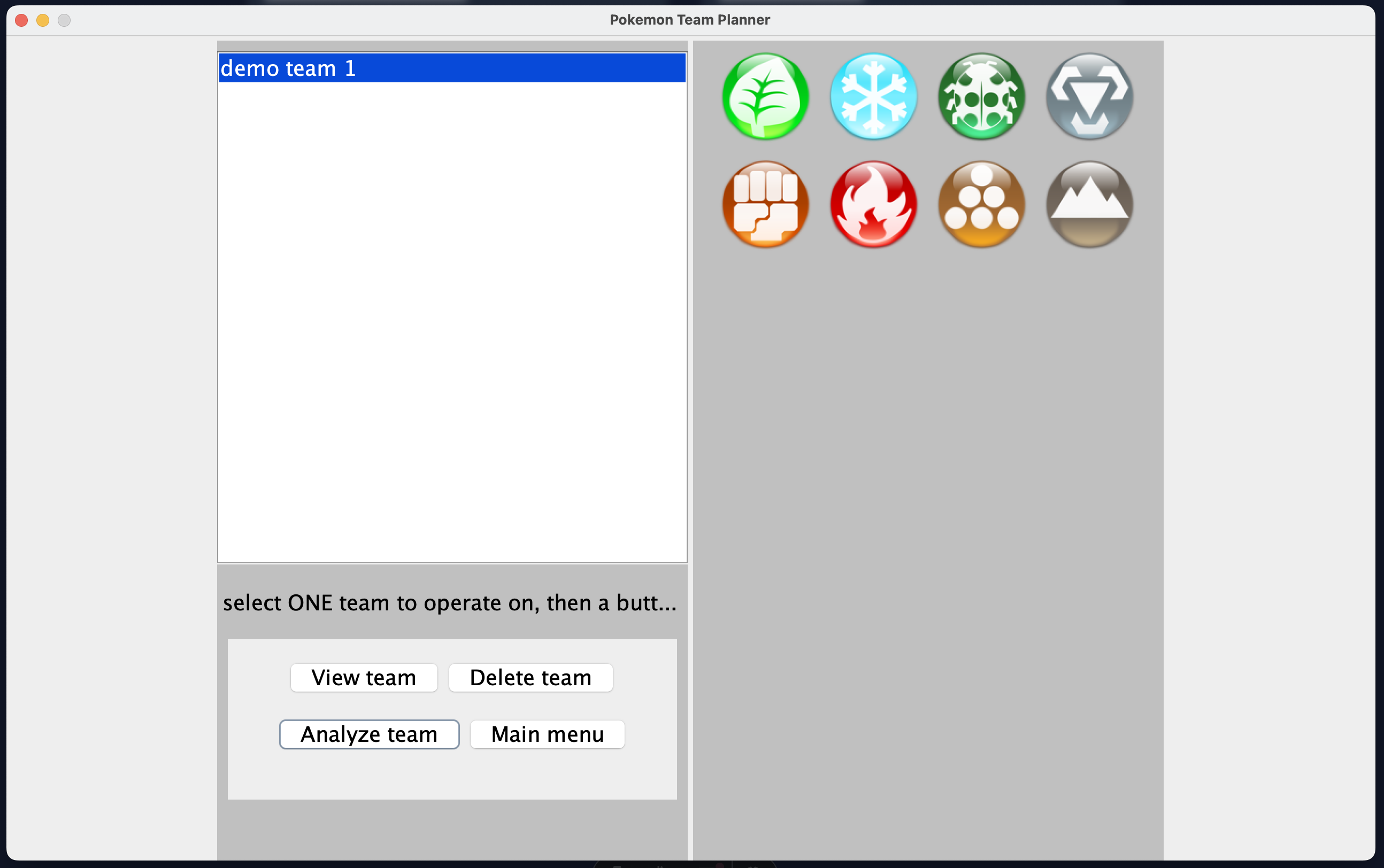
Users can also have any of their teams analyzed for its strengths. The strength analysis determines the pokemon types that the analyzed team is strong against.
Data persistence
Users can save their team drafts to non-volatile memory, and load it back into the program in the future. This was implemented by writing JSON reader/writer classes.

Technologies used
This is a Java-based desktop GUI application. The GUI was implemented using Java Swing, and the logic/model to represent pokemon were all implemented using Java.
I followed object-oriented principles in creating this app:
- I represented Pokemon and other units of data by encapsulating them into classes
- I incorporated abstraction by utilizing private members/methods to hide unnecessary details from external classes
- Inheritance was used when designing finer-level exception classes, which extended the
Throwableclass - By interacting with thrown exceptions through the
Throwablesupertype, I was able to invoke polymorphism at runtime by having each exception class implement the logging method differently
In addition, I followed test-driven development (TDD) when writing my application. By writing automated unit tests first (using JUnit), I was able to detect bugs/unforeseen edge cases earlier on in the development process, thus increasing the reliability of my application.